
Sexual dimorphism in subterranean amphipod crustaceans covaries with subterranean habitat type Sexual dimorphism can evolve in response to sex-specific selection pressures that vary across habitats. We studied sexual differences in subterranean amphipods Niphargus living in shallow subterranean habitats (close to the surface), cave streams (intermediate), and cave lakes (deepest and most isolated).…
Continue Reading....Author: Anna
Publication- Blanvillain et al., Communications Biology
Contribution of host species and pathogen clade to snake fungal disease hotspots in Europe Infectious diseases are influenced by interactions between host and pathogen, and the number of infected hosts is rarely homogenous across the landscape. Areas with elevated pathogen prevalence can maintain a high force of infection and may…
Continue Reading....Publication- Laczi et al., Science of The Total Environment
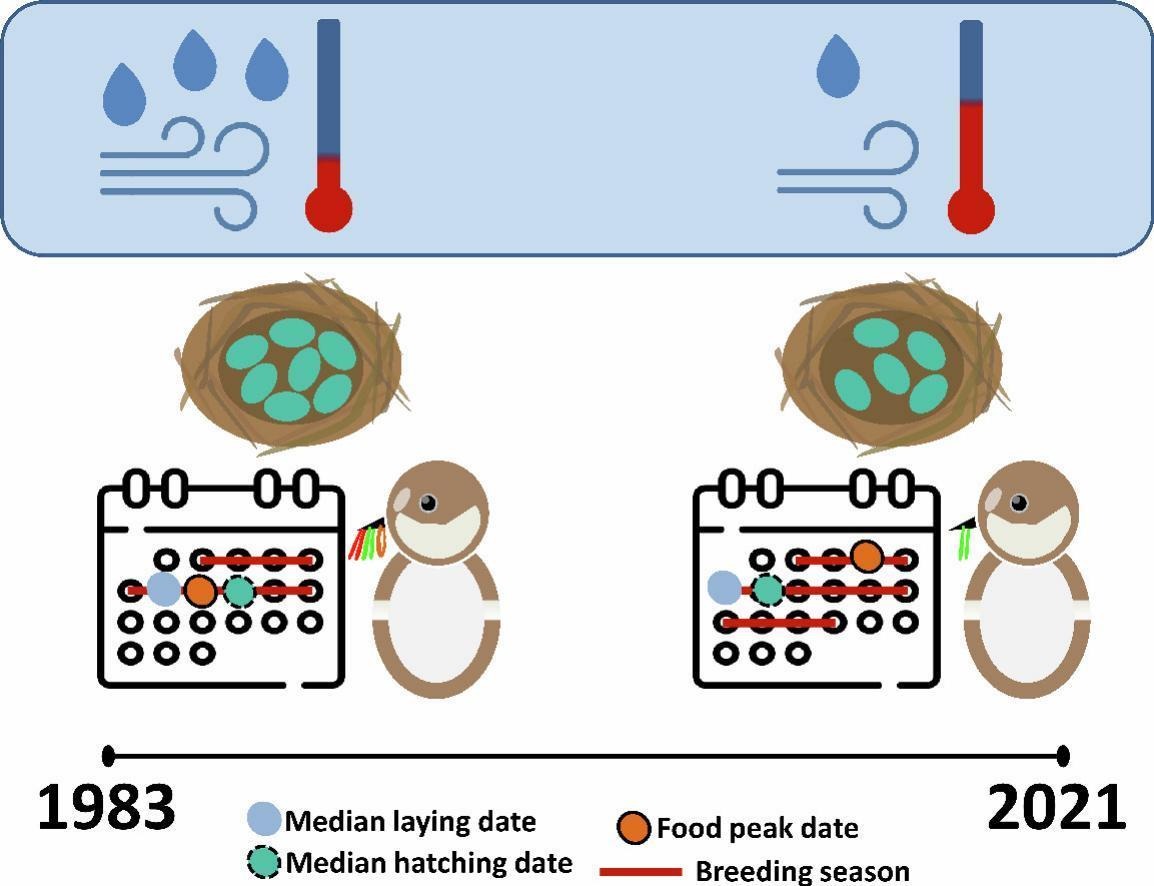
Responses in the breeding parameters of the collared flycatcher to the changing climate Global climate change involves various aspects of climate, including precipitation changes and declining surface wind speeds, but studies investigating biological responses have often focused on the impacts of rising temperatures. Additionally, related long-term studies on bird reproduction…
Continue Reading....Publication-Vilizzi et al., Science of The Total Environment
Development and application of a second-generation multilingual tool for invasion risk screening of non-native terrestrial plants Under the increasing threat to native ecosystems posed by non-native species invasions, there is an urgent need for decision support tools that can more effectively identify non-native species likely to become invasive. As part…
Continue Reading....Publication- Jabloszky et al. Ecology and Evolution
The estimation of additive genetic variance of body size in a wild passerine is sensitive to the method used to estimate relatedness among the individuals Assessing additive genetic variance is a crucial step in predicting the evolutionary response of a target trait. However, the estimated genetic variance may be sensitive…
Continue Reading....Dávid Herczeg our core member won SEH grant
Project title TESTING FOR A TROJAN HORSE EFFECT: CAN MICROPLASTICS ENHANCE THE TRANSMISSION OF DEADLY RANAVIRUSES BETWEEN AMPHIBIANS IN THE AQUATIC ENVIRONMENT?
Continue Reading....Publication- Csősz et al., ZooKeys
Broadly sympatric occurrence of two thief ant species Solenopsis fugax (Latreille, 1798) and S. juliae (Arakelian, 1991) in the East European Pontic-Caspian region (Hymenoptera, Formicidae) is disclosed This paper presents numeric morphology-based evidence on the broadly overlapping distribution of two thief ant species Solenopsis fugax (Latreille, 1798) and S. juliae (Arakelian, 1991) in the East European…
Continue Reading....Publication- Báthori et al., Biological Invasions
A survey and risk screening of non-native ant species colonising greenhouses in Hungary Invasive species represent a severe threat for ecosystem health worldwide. With increasing global trade and ongoing climate change, monitoring non-native species and their hotspots of potential spread is becoming increasingly important. Invasive ants are one of the…
Continue Reading....Publication- Báthori et al., Journal of Zoology
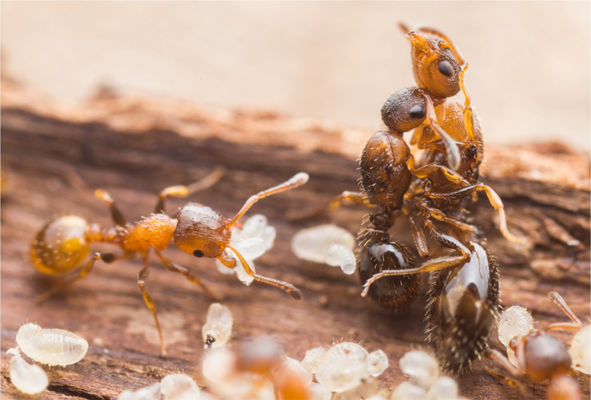
Host-switching events are not always the driver of speciation in social parasites: a case study in Temnothorax (Myrmoxenus) ants (Hymenoptera, Formicidae) Host–parasite systems, including social parasites that exploit resources of the host colonies, are fascinating objects for evolutionary biologists mainly due to the dynamic and often rapid host–parasite coevolution. Host-switching events are…
Continue Reading....Publication- Berisha et al., Current Zoology
Sex-dependent increase of movement activity in the freshwater isopod Asellus aquaticus following adaptation to a predator-free cave habitat
Continue Reading....